
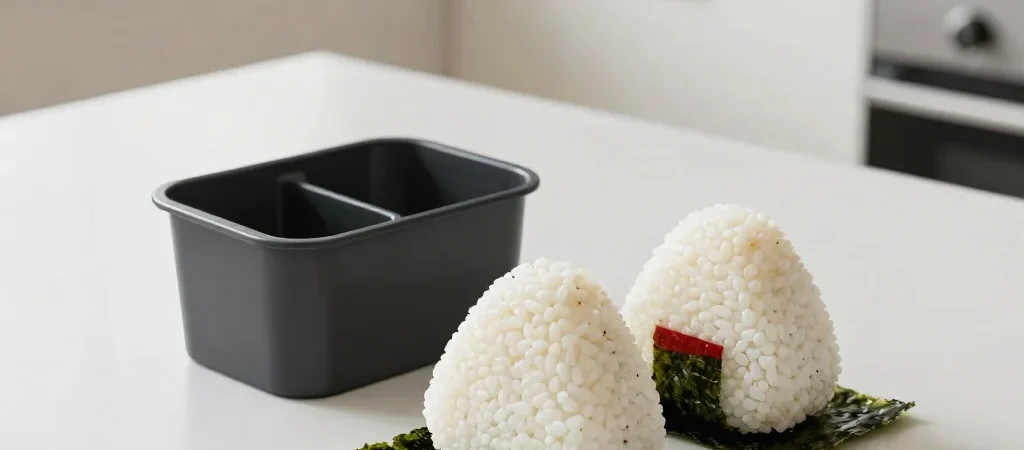
The appeal of an onigiri mold is easy to understand: press rice into a defined shape, then pack lunch without trying to make every rice ball match by hand. The useful question is whether you want that consistency often enough to give the tool drawer space. A good buying decision starts with the size and routine you actually need.
Start With Your Portion
Molds can differ in shape and capacity, so compare the listed dimensions with the rice portions you usually serve. Product photos may show several finished onigiri, but that doesn’t tell you the mold’s exact size or how much rice it holds. Look for measurements or a clearly stated capacity before assuming it will suit a child’s lunch, a snack, or a larger meal.
Read Beyond the Shape
The small details affect whether a kitchen gadget stays in rotation: how the rice releases, whether the mold comes apart, and how it should be washed. Check the listing for care instructions and material information rather than assuming it is dishwasher-safe or suitable for every use. If filling is part of your routine, confirm that the pictured design leaves room for it.
Buy for a Real Routine
A mold makes most sense when you prepare onigiri regularly or value consistent portions; occasional rice-ball makers may prefer shaping by hand and keeping the drawer clear. Treat listing claims as the starting point, and note when a detail is not provided. If we include an Amazon affiliate link, Japan NextGen may earn a commission; the link doesn’t mean we’ve tested the product ourselves.